
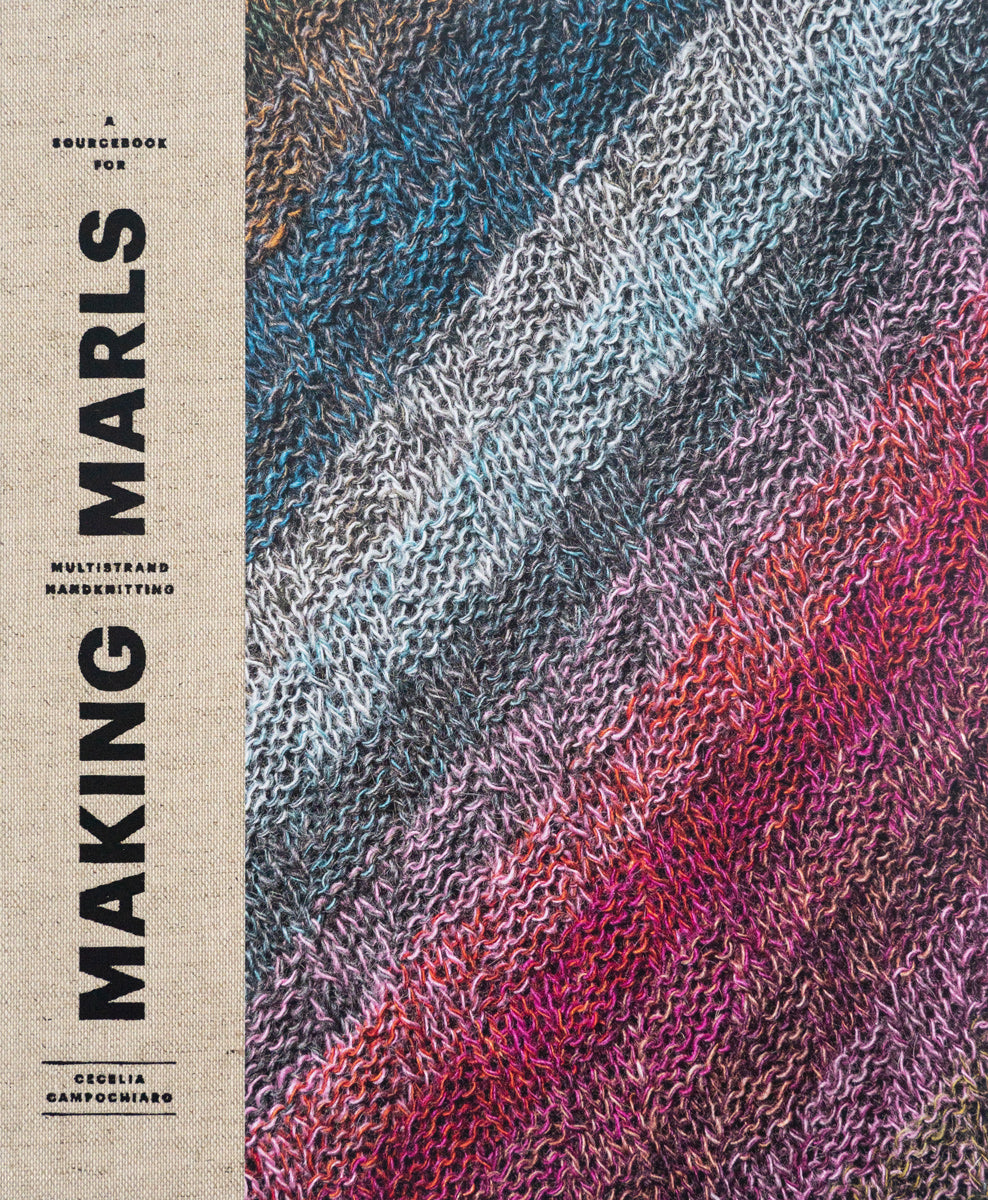
Cecelia Campochiaro: Making Marls
Tax included.
- Hardcover
In “Making Marls”, the word “sequence” is used to describe the order of marled stripes, rather than the stitch sequences in “Sequence Knitting”. There are common-strand sequences, bridging sequences, sequences from gradient sets, complex sequences, and even improvisational sequences. The book can be approached on three levels:
A reference book about multistrand handknitting.
A pattern book with over thirty “recipes”.
A source book for designers and knitters who want to work with many colors.
Regardless of whether one is new to knitting or a seasoned expert, this book will delight and inspire.
About the author
Cecelia Campochiaro appeared on the knitting scene in 2015 with her debut book, “Sequence Knitting”. Knitting was a casual pastime until she had an ah-ha moment in 2010 and realized that interesting textured fabrics could be created by the simple repetition of a sequence of stitches. This idea evolved and led to her writing “Sequence Knitting”, which is a reference book about this mindful approach to knitting.
In the years since “Sequence Knitting” debuted, she has continued to develop new ideas in knitting. “Sequence Knitting” is about texture, and her new book, “Making Marls”, is about color. Making marls, the act of working multiple strands together as one, is an old technique, but has rarely been written about as an important technique in handknitting.
She lives in Silicon Valley, where for many years she developed specialized microscopes used in computer chip manufacturing. Textiles, photography and the arts have been a lifelong passion running in parallel with her technical life. In high school and college even though her main studies were in the sciences, she studied drawing, printmaking, ceramics, and photography. Today she is fully dedicated to the fiber world and “unventing” new ways to make amazing knit fabrics.
Hardcover: 320 pages
Publisher: Chroma Opaci Books
Language: English
ISBN-13: 978-0-9863381-1-3
Product dimensions: 230 x 33 x 270 mm
EU distribution by ITO Yarn & Design GmbH
Choose options


環境責任
Responsible. Conscious. Consistent.
ITO stands for quality with a conscience. Our yarns are produced in Japan with respect for people, animals, and the environment. We prioritize short supply chains, transparent manufacturing, and a deep appreciation for natural materials. Many of our yarns are made from recycled or renewable raw materials such as silk, linen, or paper fibers. Our focus is on durable, resource-efficient, and timelessly beautiful yarns.
Learn more職人技
Fine threads. Japanese precision.
ITO combines centuries-old textile traditions with modern aesthetics. Our partner manufacturers in Japan work with artisanal perfection, meticulous care, and respect for every detail. From fine silk yarns to innovative fabric blends, every product reflects the dedication of Japanese craftsmanship.
Learn more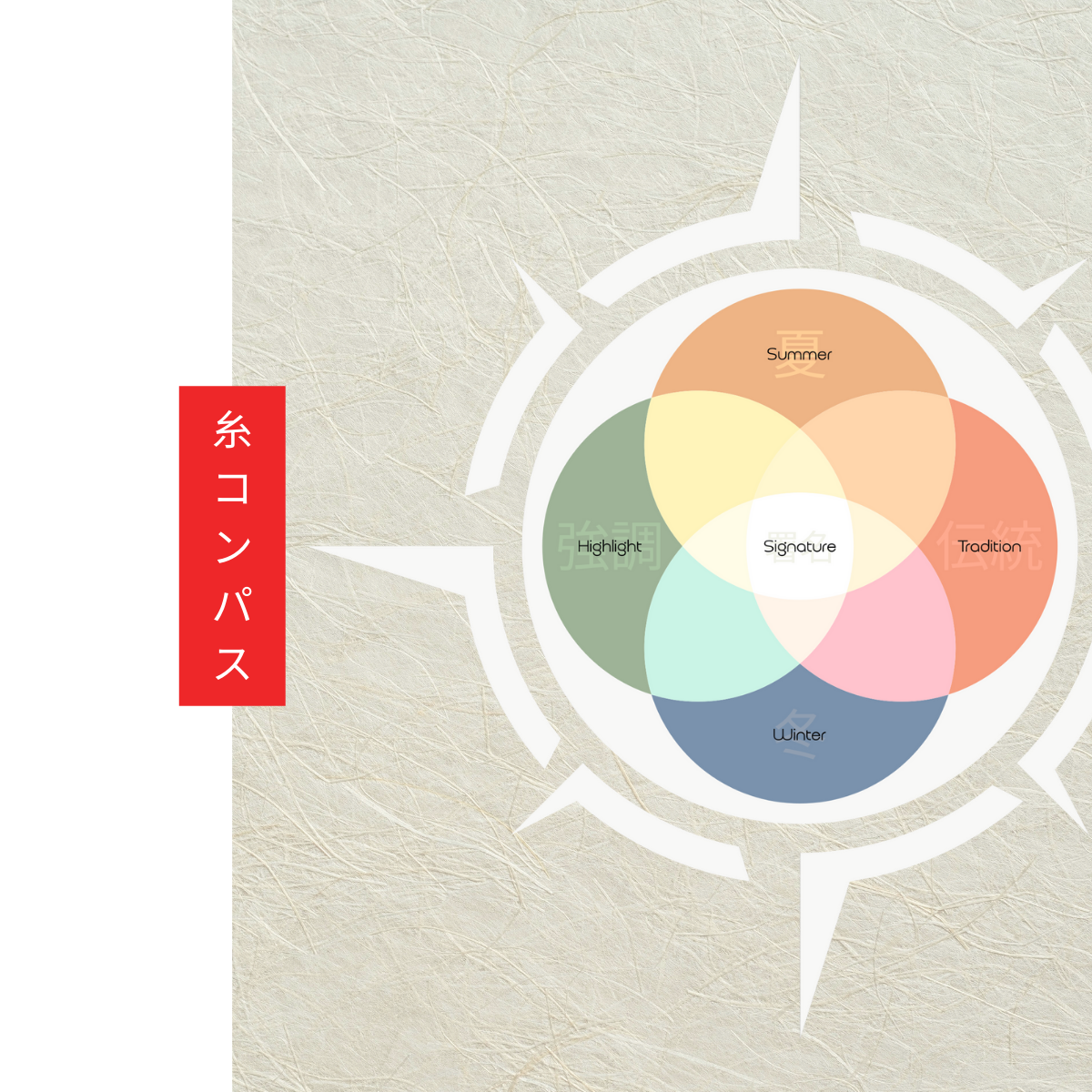
糸羅針盤
Haven't found the right yarn yet?
Our Yarn Guide helps you find exactly the right material for your project. It helps you make decisions and provides the best possible guidance through our entire selection.
よくある質問
FAQ - Frequently Asked Questions
Most ITO yarns are made from select natural fibers such as silk, wool, mohair, cotton, linen, and paper. Our yarns are produced in Japan using traditional methods and are partially finished by hand.
Every ITO yarn offers a unique combination of texture, color, and material. Our yarns are exceptionally fine, creating flowing fabrics that blend beautifully. This makes them particularly well-suited for precise work and multi-strand knitting.
Yes. All ITO yarns are manufactured in Japan by specialized spinning mills with a long tradition and the highest quality standards.
At ITO, we are committed to responsible manufacturing. Many of our yarns are made from natural fibers, byproducts of silk production, or recycled materials. We are, of course, dedicated to animal welfare and use only mulesing-free wool.
We continuously monitor our supply chains to ensure fair and environmentally friendly processes. We apply the same standards to our packaging materials.
Orders are usually processed within 1–3 business days.


Fine yarns from Japan
With Heritage. With Stance.
For design, not just use.

Worldwide shipping
Fast delivery. No minimum quantity.

14-day return policy
Making a decision takes time. You can take it.

Secure payment
Choose your preferred payment method. Simple and secure.