
構造
Seamless knitting: Top-down
Enjoy the convenience of seamless knitting. Our top-down patterns are worked from the top down, and you can try them on as you go.
The timeless summer shirt with a clever shoulder design
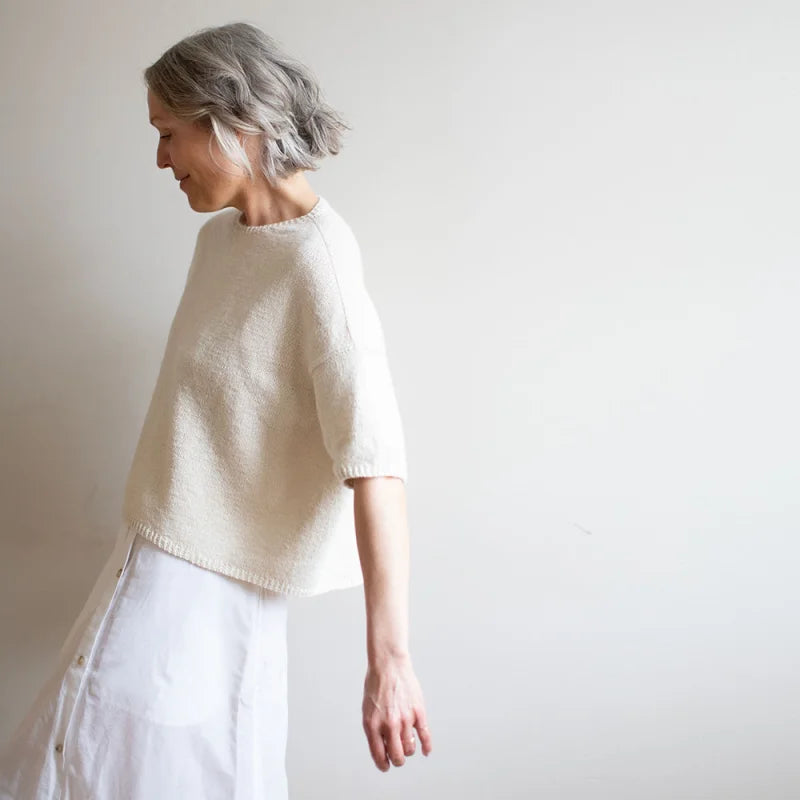
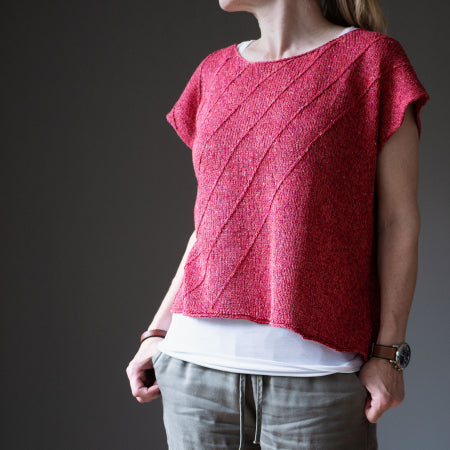
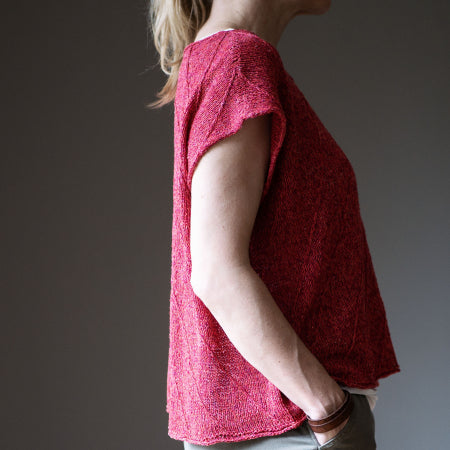
The EASE TEE stands out with its minimalist, smooth stockinette stitch look and an elegantly forward-shifted shoulder line. True to the spirit of seamless knitting, the shirt is worked from the top down and requires no tedious sewing together.
ab 95,10 €
EASE TEE is worked in stockinette stitch, with a simple silhouette and the shoulder line slightly pushed forward.
The tee is worked seamlessly from the top down. First, the rib neck edge is worked in the round. Then, short rows are worked to shape the neckline, before the yoke is worked in the round until the total shoulder width is achieved.
The work is then divided into a front and back yoke, which are worked back and forth. After this, stitches are picked up and knitted along the armholes, and the work is again joined to be worked in the round to the bottom of the armholes. Here, the work is divided into body and sleeves.
The body is worked in the round and finished with a lightly curved hem and a rib edge. The sleeves are also worked in the round and are finished with a rib edge.
As the tee is worked from the top down, it is easy to adjust the body and sleeve lengths along the way to fit you perfectly.
The pattern is available here: https://anneventzel.com/shop/4-english/536-ease-tee-english/
Pasaka Sweater by Zanete Knits
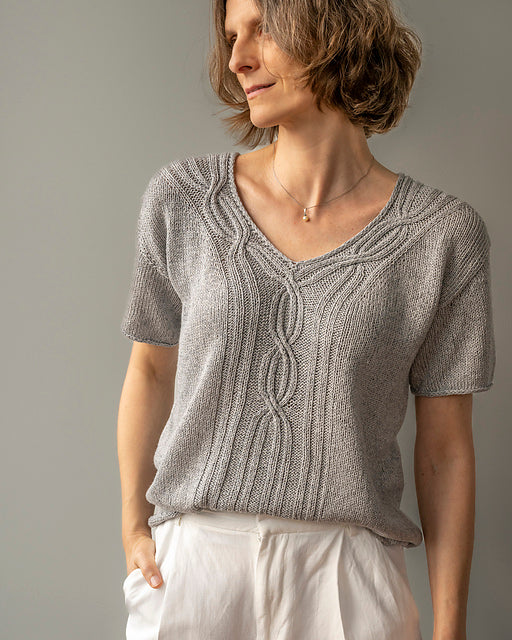
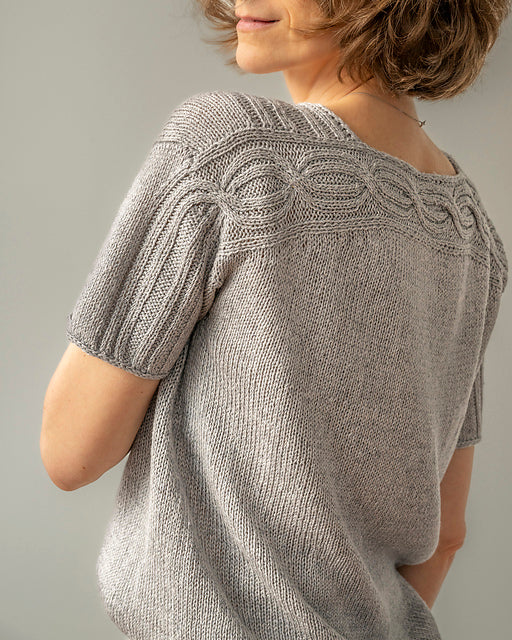
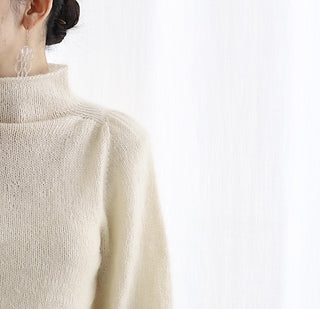
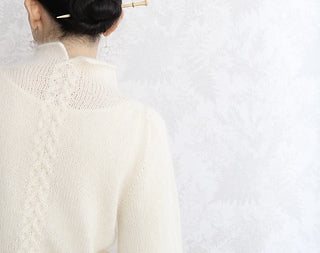
The simple top-down construction avoids complicated shaping, allowing the intricate pattern to take center stage.

ARMOR sweater by ANKESTRiCK
Since the design requires no short rows at all, this seamless classic is also an excellent project for ambitious beginners.
More Top-Down Designs
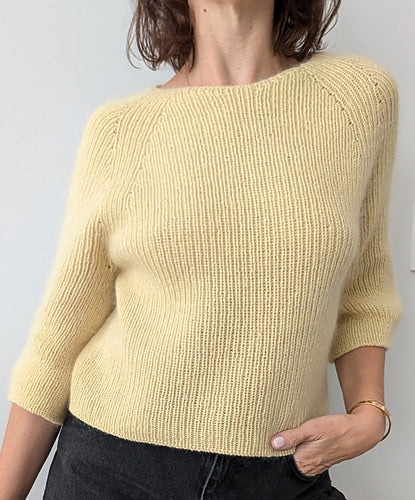
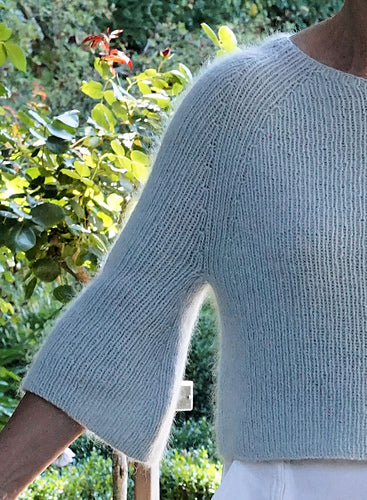
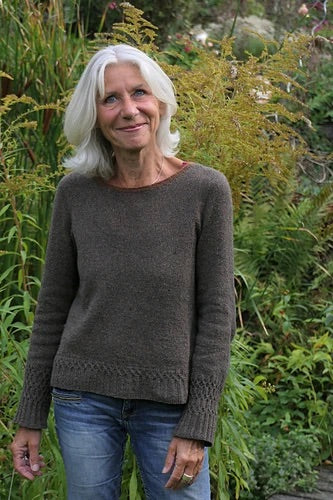
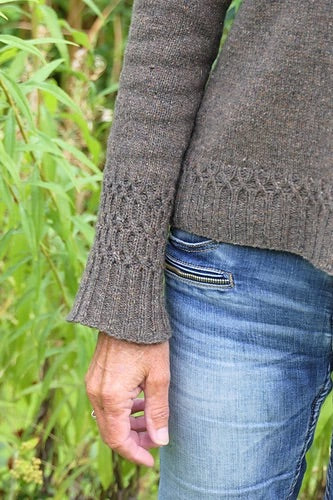
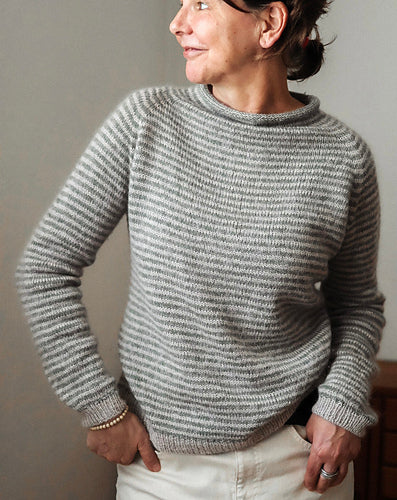
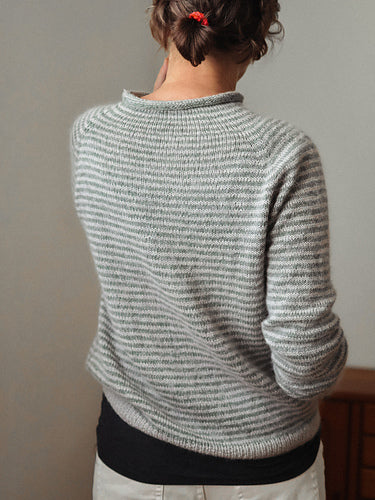
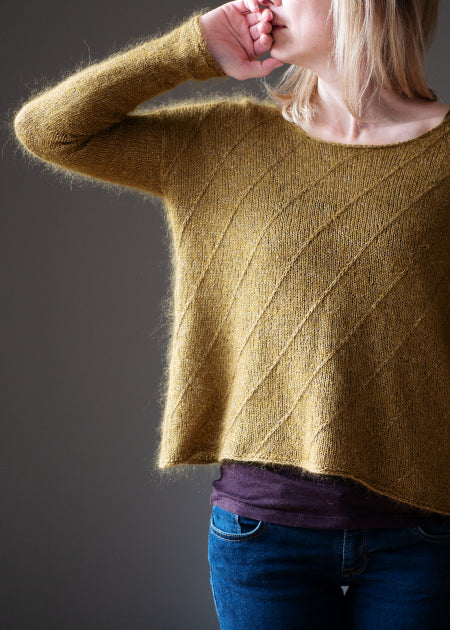
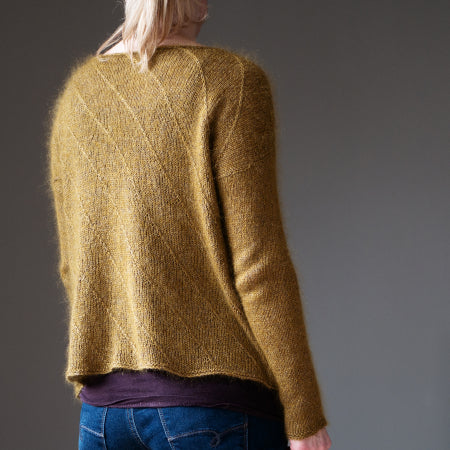
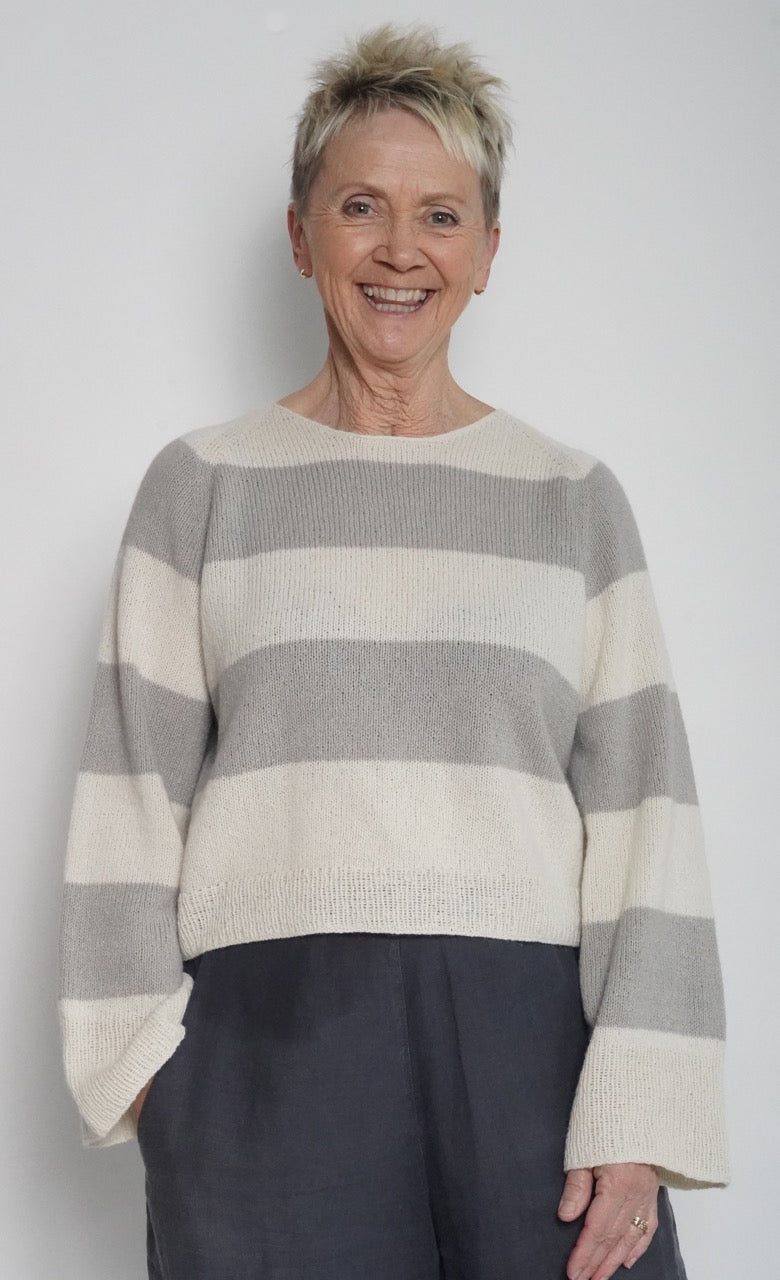
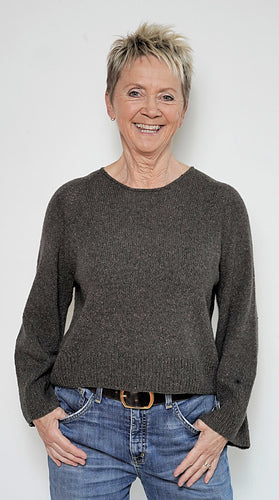
Knitted seamlessly from top to bottom: What does “top-down” mean?
The term “top-down” describes the direction of work in a knitting project. You work from the top down. Unlike traditional patterns, in which the front, back, and sleeves are knitted separately from the bottom up and then laboriously sewn together at the end, a top-down garment is created in one single piece.
You start right at the neckline or collar and work your way down step by step, passing through the shoulder area and the yoke, that is the upper torso section. Once the desired height is reached, the sleeve stitches are placed on hold, and the body is finished in rounds down to the hem. Afterward, the held stitches are picked up again to knit the sleeves directly onto the body.
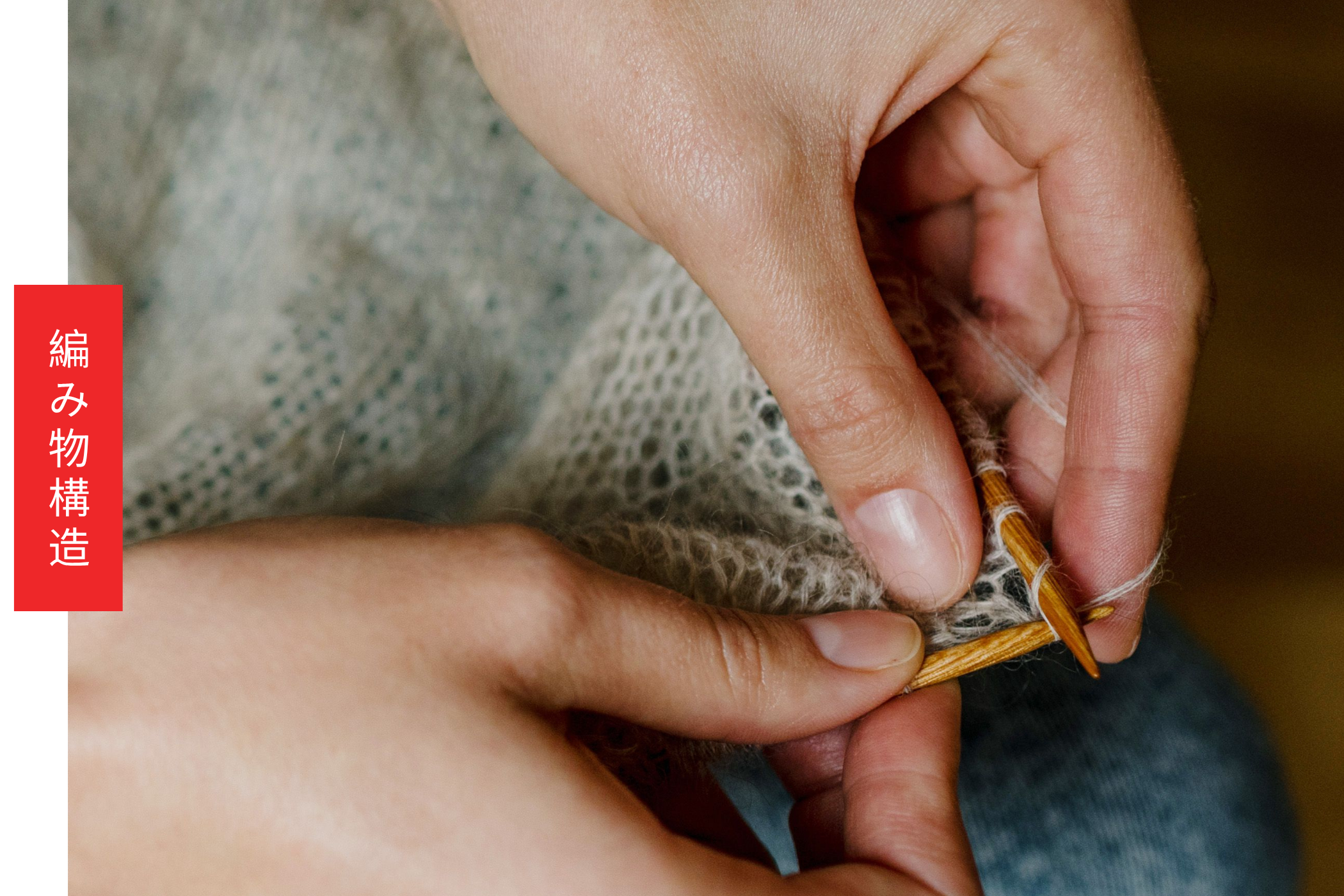
Why Knit Top-Down? An Overview of the Benefits
Knitting from the top down offers clear advantages that make it one of the most popular techniques in the knitting community:

No tedious sewing
Since the knitted piece is worked seamlessly in the round, there is absolutely no need for finishing, or “seaming.” Once the last stitch has been bound off, all that’s left to do is weave in the ends.

A Perfect Fit Through Trying It On
Since the sweater or cardigan is worked from the top down, you can slip it on at any time while you’re knitting. This allows you to check the fit, width, and drape directly on your own body.

Maximum Flexibility in Length
The total length of the body and the length of the sleeves can be easily adjusted. If you prefer to wear your sweater cropped or a little longer, simply knit more or fewer rounds.

Visual Continuity
Without any interrupting seams, delicate yarns and fine textures drape particularly smoothly.
Key Terms & Techniques for Top-Down Patterns
Top-Down Raglan (TDR)
The best-known variation of the top-down construction method. Here, four distinct diagonal lines, the raglan lines, run diagonally from the neckline to just below the armpits. Stitches are increased at regular intervals along these lines, shaping the body and sleeves simultaneously.
Circular Yoke
In a circular yoke, the increases are distributed evenly across the entire yoke, often hidden invisibly within a colorwork pattern or a delicate lace pattern. The result is a gently rounded shoulder area without any sharp lines.
Short Rows
To ensure that the neckline sits slightly higher in the back than in the front and that the sweater fits perfectly around the neck, short rows, such as German short rows, are often worked after the cuff. They ensure an ergonomic, professional fit.
The Right ITO Yarns for Your Top-Down Project
Since seamless top-down patterns are knitted in one continuous piece, yarn textures and fine fibers are showcased particularly harmoniously. In general, all of our fine ITO yarns are ideal for seamless designs, from lightweight summer yarns to warm winter yarns.
Our versatile classics are especially popular. For example, combine ultra-delicate yarns like ITO Sensai with a smooth yarn like ITO Kosho or our mottled bourette silk ITO Kinu to create a real eye-catcher. The result is form-retaining yet wonderfully lightweight favorite pieces that drape softly and feel like a second skin.
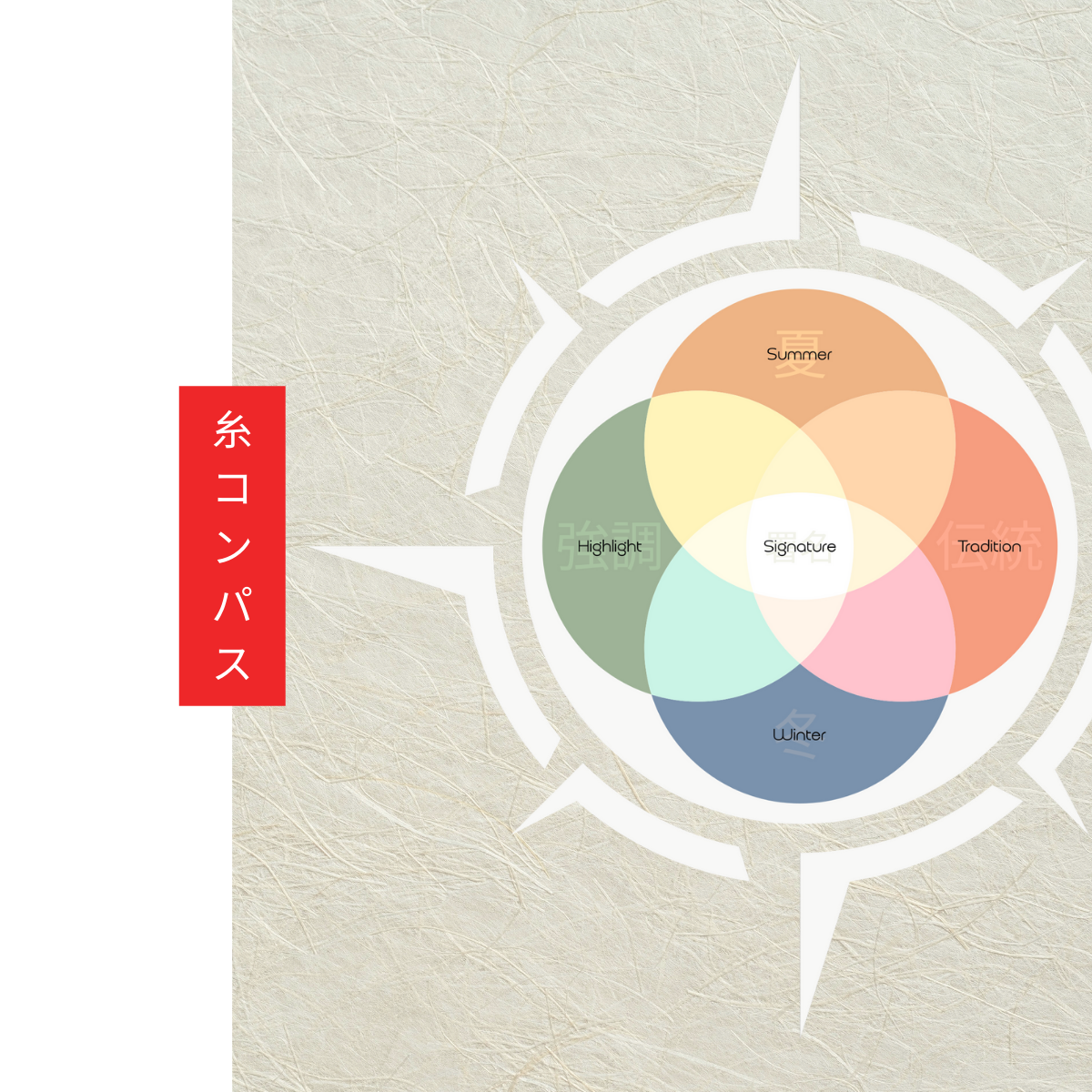
糸羅針盤
Haven't found the right yarn yet?
Our Yarn Compass helps you find exactly the right material for your project. It helps you make decisions and provides the best possible guidance through our entire product line.
FAQ: Frequently Asked Questions About Our Knitting and Crochet Patterns
Since we work closely with international designers, almost all patterns are available in English or in multiple languages. The available languages are always listed as flags right next to the design.
That depends entirely on the design you choose. After your purchase, you’ll receive our own ITO designs as a digital download (PDF) via email, so you can get started right away on your tablet or smartphone. For patterns by external designers, our selection menu will take you directly to Ravelry via a link, where you can purchase the pattern digitally.
Of course! Our fine Japanese yarns are incredibly versatile. If you’ve set your sights on one of our yarns, you can use it for any design you like. Just be sure to check the gauge and yardage specified in your pattern. The beauty of ITO is that you can create your very own textures by combining different strands.
You generally won’t find free patterns here, and that’s out of deep respect. Behind every professional knitting and crochet design lie months of hard work. From the initial creative sketch to the complex mathematical calculations for different sizes, all the way through to test knitting and writing. Since many of the designs on our site are created by independent designers, your purchase supports them.


Fine yarns from Japan
With Heritage. With Stance.
For design, not just use.

Worldwide shipping
Fast delivery. No minimum quantity.

14-day return policy
Making a decision takes time. You can take it.

Secure payment
Choose your preferred payment method. Simple and secure.